
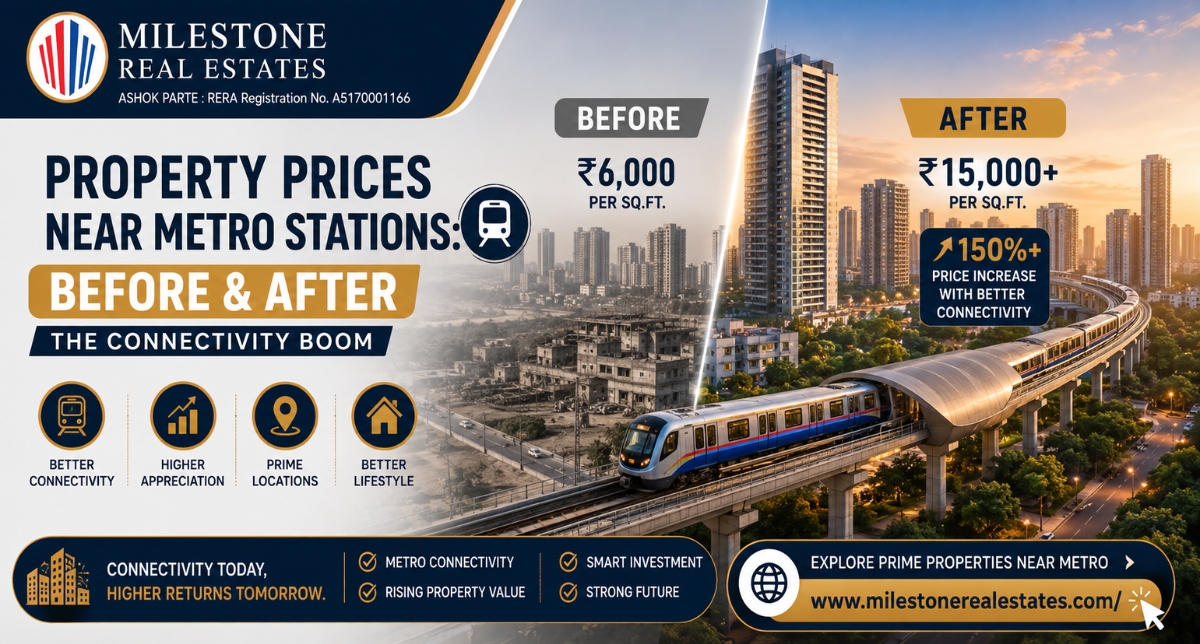
Metro rail projects have transformed the way people travel across India's major cities. What were once considered distant locations are now becoming well-connected neighbourhoods that attract homebuyers, businesses, and investors alike. Improved transport has not only reduced commuting time but has also influenced the demand for residential and commercial properties. Over the years, many areas have witnessed noticeable growth before and after metro projects became operational. Understanding how Property Prices Near Metro Stations change over time helps buyers make informed decisions while identifying locations with promising long-term potential.
Why Metro Projects Influence Real Estate
One of the biggest reasons metro corridors affect property demand is improved Metro Connectivity. Easy access to workplaces, schools, shopping centres, hospitals, and entertainment destinations makes daily life more convenient. As travel becomes faster and more reliable, more families consider moving to locations that were previously overlooked because of longer commuting times. Better accessibility also attracts businesses, creating employment opportunities and encouraging balanced urban development.
Growth Begins Before the Metro Opens
Property demand often starts increasing well before a metro line becomes operational. Once construction begins and infrastructure plans are officially announced, buyers and investors begin exploring nearby locations in anticipation of future growth. Developers also launch new residential and commercial projects to meet rising demand. This early interest creates momentum that supports gradual value growth as infrastructure development progresses.
The Market Responds to Better Accessibility
The Real Estate Market reacts positively when transportation improves because connectivity plays an important role in property decisions. Locations that offer easy access to metro stations generally become more attractive to working professionals, students, and families. Improved accessibility often encourages new retail developments, offices, healthcare facilities, and educational institutions, creating complete neighbourhoods that appeal to a wider range of buyers.
Infrastructure Supports Long-Term Value
Large-scale Infrastructure Development extends beyond metro rail alone. Roads, flyovers, pedestrian facilities, commercial centres, and public amenities often improve alongside major transport projects. These combined developments create better living conditions while increasing the appeal of surrounding neighbourhoods. Buyers who choose properties in areas experiencing planned infrastructure growth often benefit from stronger long-term demand and improved lifestyle convenience.
Appreciation Happens Gradually
Successful Property Appreciation is usually the result of multiple factors working together rather than a single project. Metro connectivity improves accessibility, but long-term value also depends on schools, healthcare, employment opportunities, retail growth, and community development. Locations that continue evolving after infrastructure completion often experience healthy appreciation because they become more desirable places to live and work over time.
Investors Look Beyond Today's Prices
Many experienced buyers consider metro projects while planning Property Investment because future connectivity can significantly improve a location's attractiveness. Instead of focusing only on current prices, investors study proposed transport corridors, surrounding development plans, and expected population growth. Identifying areas during the early stages of infrastructure expansion allows buyers to participate in long-term growth rather than reacting after demand has already increased.
Buying at the Right Stage Matters
When Buying Property, understanding the development cycle of a location can be beneficial. Some buyers prefer investing when infrastructure projects are under construction, while others choose completed neighbourhoods where connectivity is already established. Both approaches can offer value depending on individual goals, financial planning, and investment timelines. Careful research, legal verification, and selecting a trusted developer remain essential regardless of the stage of development.
Areas Around Metro Stations Continue to Evolve
A well-planned Metro Station Property often attracts increasing interest because residents value shorter travel times and better accessibility. As more people move into these neighbourhoods, supporting businesses, restaurants, schools, and community facilities also expand. This creates a positive cycle where improved infrastructure encourages stronger residential demand, contributing to balanced urban growth and better quality of life for existing and future residents.
Final Thoughts
Metro rail projects have become one of the strongest catalysts for urban transformation across India. Better connectivity has encouraged residential growth, commercial expansion, and improved infrastructure in several emerging locations. While every neighbourhood develops at its own pace, areas supported by strong planning and transport networks often experience sustained demand over time. Buyers who carefully evaluate future infrastructure, location advantages, and long-term development plans can make more informed property decisions. Choosing a well-connected neighbourhood today can provide greater convenience, improved lifestyle, and meaningful financial value for many years as cities continue expanding around modern transport systems.