
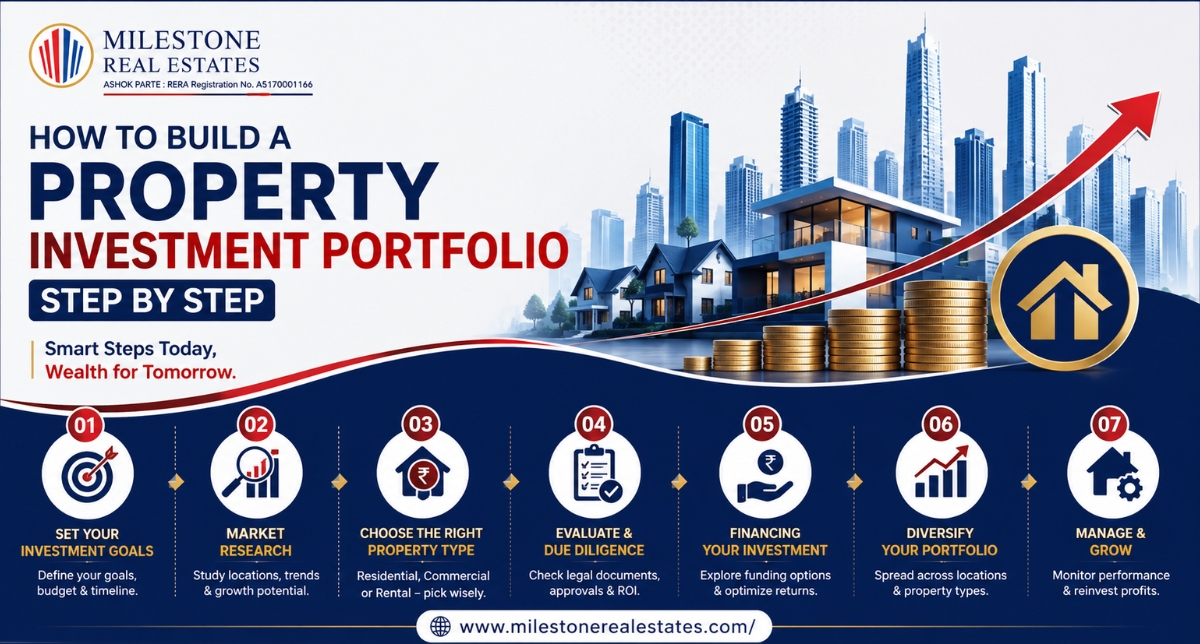
Building a property portfolio is a long-term process that requires planning, patience, and informed decision-making. Instead of purchasing properties randomly, successful investors usually create a clear strategy based on their financial capacity, investment goals, location preferences, and future plans. Whether you are purchasing your first property or thinking about adding another one, having a structured approach can help you make better decisions. A well-planned Property Investment Portfolio can gradually become an important part of your overall financial strategy.
Start With Your Financial Foundation
Before purchasing your first property, understand your current financial position. Review your income, savings, existing loans, monthly expenses, and emergency funds. This gives you a realistic idea of how much you can comfortably allocate towards property. A strong financial foundation allows you to manage ownership expenses while keeping enough flexibility for future opportunities.
Define Your Investment Goals
Every Property Investment should have a clear purpose. Some investors focus on rental income, while others prioritise long-term appreciation or a combination of both. Your goal can influence the type of property, location, budget, and investment horizon you choose. Defining these objectives early makes it easier to evaluate opportunities consistently.
Begin With the Right First Property
Your first property can establish the foundation for future investments. Look for a property in a location with strong end-user demand, reliable infrastructure, essential amenities, and future development potential. Avoid choosing a property simply because it is inexpensive. The objective is to purchase an asset that fits your strategy and can remain attractive to future buyers or tenants.
Research Before Every Purchase
Successful Real Estate Investment depends heavily on research. Study local prices, rental demand, infrastructure plans, developer reputation, neighbourhood development, and comparable properties. Visit locations personally and speak with professionals who understand the local market. Good research can help you identify opportunities while reducing the chances of making decisions based on assumptions.
Add Properties Gradually
There is no need to build a large portfolio immediately. Once your first property is financially stable, you can evaluate whether purchasing another asset makes sense. An Investment Property should be added only when your finances, cash flow, and overall strategy support it. Gradual expansion allows investors to learn from each purchase while managing their exposure responsibly.
Create Multiple Income Sources
A diversified portfolio can potentially generate income through different types of properties and locations. Rental Income can provide regular cash flow, depending on the property's location, tenant demand, rental market, and operating expenses. Investors should carefully calculate expected rent against maintenance, taxes, loan costs, vacancy periods, and other ownership expenses before making a purchase.
Diversify Your Portfolio
Property Diversification can help reduce dependence on a single location or property type. For example, an investor may eventually consider different residential markets, commercial properties, or properties serving different tenant segments. Diversification should happen thoughtfully rather than simply increasing the number of properties. Every addition should have a clear role within the overall portfolio.
Monitor the Property Market
The Property Market changes continuously. Rental demand, infrastructure, employment opportunities, buyer preferences, interest rates, and economic conditions can influence property performance. Reviewing your portfolio regularly helps you understand whether your existing properties continue to match your goals and whether future purchases should focus on different locations or property types.
Focus on Long-Term Value
Property Appreciation is influenced by factors such as location, infrastructure, demand, development, and broader economic conditions. Investors should avoid assuming that every property will appreciate at the same rate. Instead, focus on assets with strong fundamentals and locations that can remain attractive as the surrounding area develops.
Think Long Term
A successful Long-Term Investment strategy requires patience. Building a portfolio is not about purchasing as many properties as possible in the shortest time. It is about gradually acquiring suitable assets, managing them effectively, reviewing their performance, and adjusting the strategy as your financial position changes. A patient approach can provide greater control and reduce unnecessary financial pressure.
Final Thoughts
Building a property portfolio is a journey rather than a single transaction. Start with a strong financial foundation, define your goals, research every opportunity, and expand gradually when the numbers support your plans. Diversifying thoughtfully, monitoring market conditions, and focusing on long-term value can help create a balanced investment strategy. The most successful portfolio is not necessarily the largest one. It is the one that fits your financial capacity, supports your objectives, and can be managed confidently over time.