
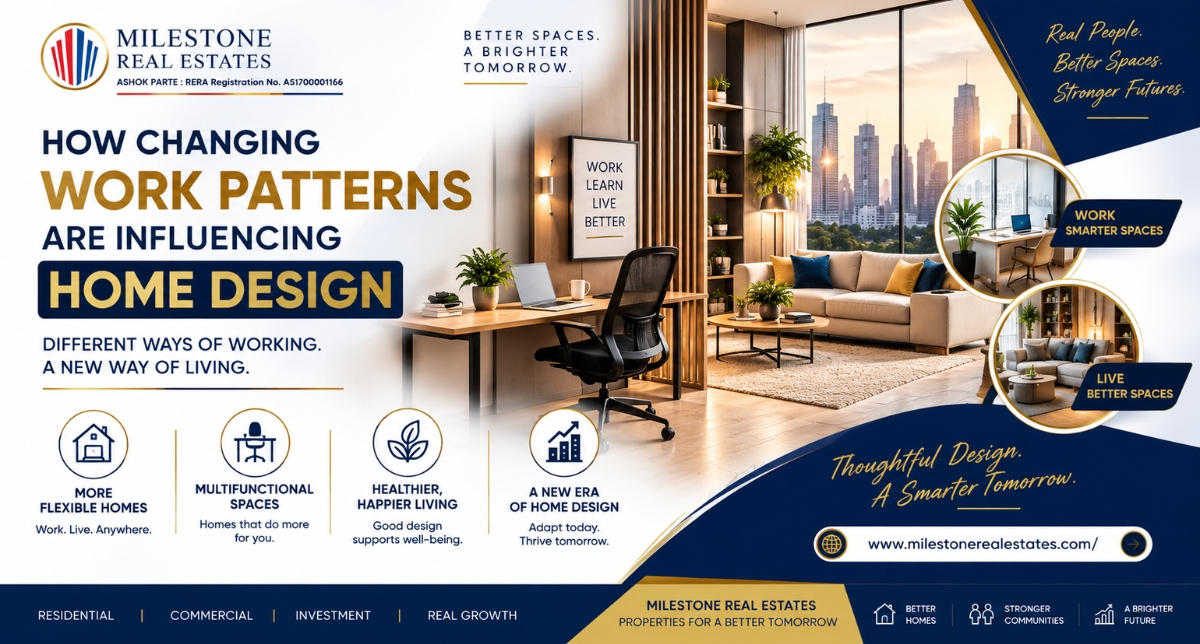
The way people work has changed, and homes are changing with it.
A few years ago, most people looked at a home mainly in terms of bedrooms, bathrooms, kitchen space, and location. Today, buyers are asking different questions. Is there a quiet corner for work? Is there enough natural light? Can one room serve more than one purpose? Is the internet connection reliable? These practical questions are influencing what people expect from their homes.
As work becomes more flexible, Home Design is gradually moving towards spaces that can support both professional and personal life.
Work Is No Longer Always Tied to an Office
The growth of Work From Home has changed how people use their living spaces. A dining table may become a temporary workstation during the day, while a spare bedroom can turn into a dedicated workspace.
This has made buyers more conscious about room sizes, ventilation, natural light, noise levels, and the availability of spaces that can be separated from the main living area.
The idea is simple: people want a home where working does not completely take over everyday family life.
The Rise of the Home Office
A dedicated Home Office is becoming an attractive feature, particularly for professionals, business owners, freelancers, and people who spend part of their working week at home.
It does not necessarily need to be a large room. A well-planned corner with a desk, comfortable chair, storage, good lighting, and sufficient electrical points can be enough.
In larger homes, buyers may prefer an additional room that can be converted into an office, study, or multipurpose space depending on their needs.
Flexible Spaces Are Becoming More Useful
Flexible Work has also changed the way people think about rooms.
Instead of having spaces designed for only one purpose, homeowners increasingly prefer rooms that can adapt. A study can become a guest room. A balcony can become a reading area. A larger bedroom can include a small workstation.
This flexibility can be particularly useful in urban homes where every square foot needs to serve a purpose.
What Are Homebuyers Looking For?
Modern Homebuyers are paying attention to features that were sometimes overlooked earlier. Natural light, ventilation, sound levels, storage, balconies, internet connectivity, power backup, and comfortable common areas can all influence the buying decision.
The preference is moving towards homes that make everyday life easier rather than simply offering a larger number of rooms.
Modern Homes Need Better Planning
Today's Modern Homes are increasingly being designed around how people actually live. Open living spaces can create a sense of openness, while well-positioned rooms can provide privacy when someone needs to concentrate.
Builders and architects are also exploring better lighting, efficient layouts, multipurpose rooms, and community areas where residents can work or relax.
The goal is not to turn every home into an office. It is to give residents enough flexibility to use their space according to their lifestyle.
Technology Is Part of the Home
Technology has become another important consideration in Property Design.
Strong internet connectivity, multiple charging points, smart lighting, security systems, video doorbells, and home automation can make working and living more convenient.
These features may not determine a purchase on their own, but together they can improve the everyday experience of a home.
Location Still Matters
Even with changing work patterns, location remains important. A person working from home today may still need to visit an office, meet clients, attend business meetings, or travel regularly.
For this reason, buyers continue to look for homes with convenient access to roads, public transport, commercial areas, restaurants, healthcare, and other daily necessities.
A flexible working lifestyle does not mean people have stopped caring about connectivity. It simply means their priorities have become broader.
What This Means for Real Estate
These changes are influencing wider Real Estate Trends. Developers are paying more attention to lifestyle-focused layouts, multipurpose spaces, work-friendly amenities, and community facilities.
The demand is gradually moving towards homes that can adapt as people's working arrangements change.
A property designed for only one type of lifestyle may feel restrictive over time. A flexible property can remain useful even when a person's job, family situation, or daily routine changes.
Final Thoughts
The modern home is becoming more adaptable. People are no longer looking only for a place to sleep and relax. They want a space where they can work, spend time with family, pursue hobbies, and manage everyday responsibilities comfortably.
Changing work patterns are encouraging developers and buyers to think differently about space. A small workspace, flexible room, good natural light, reliable technology, and thoughtful planning can make a noticeable difference.
The homes that stand out in the future may not simply be the biggest ones. They may be the ones that understand how people actually live and work.